• Skip to primary navigation
  • Skip to main content
  • Skip to footer
  • Home
    • Contact us
    • Diabetes Advocacy Disclaimer
  • Blog
  • Downloads
  • Our Story
  • Diabetes Advocacy
  • Nav Social Menu

    Let’s Connect!

Diabetes Advocacy

Diabetes Advocacy

Living your best life with diabetes

  • Awareness and Mental Health
    • How to Have a Diabetes Meltdown Day
    • Tattoos
      • 7 critical things to know if you have diabetes and want to get a Tattoo
  • Financial information
    • Disability Tax Credit for people with diabetes
    • Financial Assistance in Canada
    • RDSP
    • Resources and Supports
  • Parenting
    • What a parent of a child with diabetes need to know
    • Back to School
  • Technologies
    • Diabetes Care Basics
      • Ketones
      • Sick Day tips
    • Continuous Glucose Monitoring Systems
    • Insulin Pumps
      • Pros and Cons
      • What are Basal IQ™ and Control IQ™ Technologies?
  • Travel tips
    • Flying with an insulin pump and CGM
    • 11 Tips for Cruising with Type 1 Diabetes
    • Getting Travel Insurance with Type 1 Diabetes
You are here: Home / Diabetes Technologies / Why time in range is important for people diabetes

Why time in range is important for people diabetes

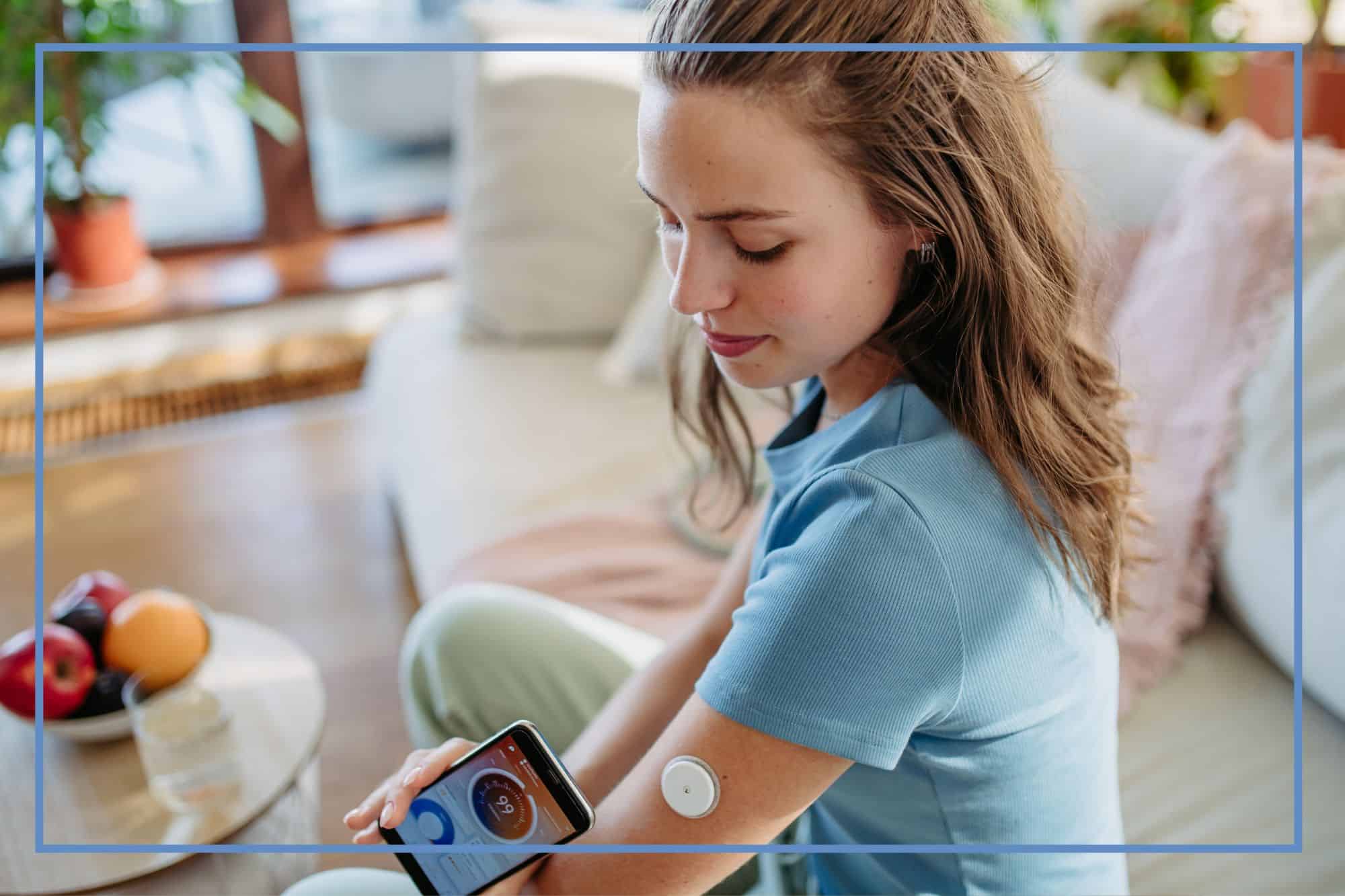
woman with brown hair scanning her Libre sensor.

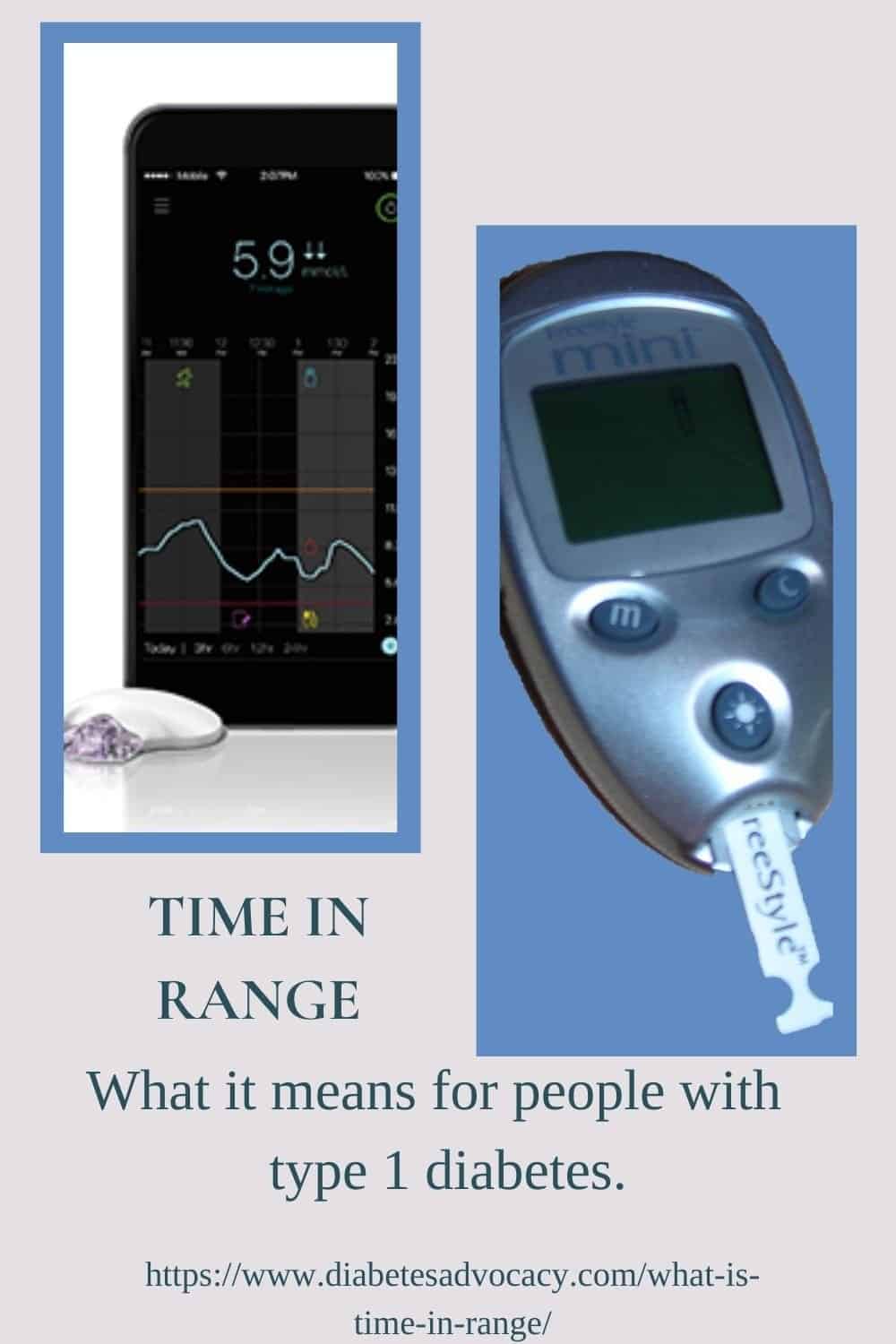
Time in Range (TiR) is a relatively new tool in diabetes care. It works best when used with a continuous glucose monitor. It reflects the amount of time, usually over a 10-14-day period, that your blood glucose levels stay between a set target.

This measurement more accurately accounts for the highs and lows that a person with diabetes experiences each day.

How does it differ from an A1c?
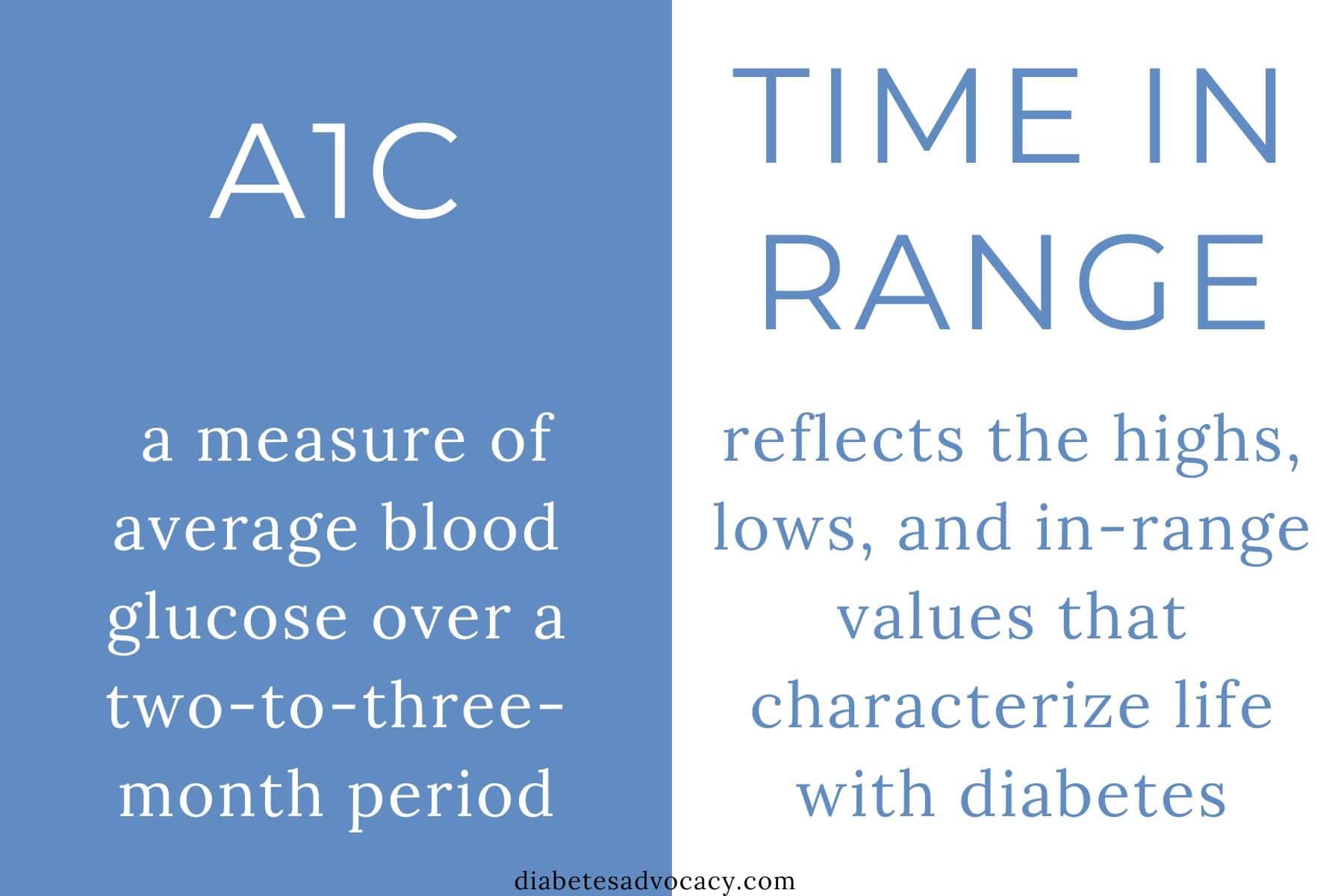
blue box on the left reading A1c a measure of average blood glucose over a two-to-three month period. On the right written in blue on a white background is the text Time in Range reflects the highs, lows and in-range values that characterize life with diabetes.

Diatribe noted that Time-in-Range captures variation.  It reflects the highs, lows, and in-range values that characterize life with diabetes.  A1C, however, is a measure of average blood glucose over a two-to-three-month period.  It cannot capture time spent in various blood glucose ranges.

Is Time in Range important?

woman in cloth hat looking to the sky with an uncertain look

TiR provides a greater focus on more stable blood glucose levels. When your glucose swings high and low throughout the day, it may cause more damage to the body than more stable readings. Maintaining a more consistent blood glucose level may be better for your overall health and wellbeing.

Why is Time in Range important?
Time in range provides immediately visible, understandable, and malleable value in patients’ day-to-day efforts at achieving good glucose control.

According to the Optometry Times, glycosylated hemoglobin or A1c is not a faithful measurement of “average” blood sugar control.” In some cases, variations in patient hemoglobin status because of anemia, polycythemia, chronic kidney disease, and genetic hemoglobinopathies may render A1c unreliable. TiR however provides an “immediately visible, understandable, and malleable value in patients’ day-to-day efforts at achieving good glucose control.”

How does Time in Range affect your A1c?
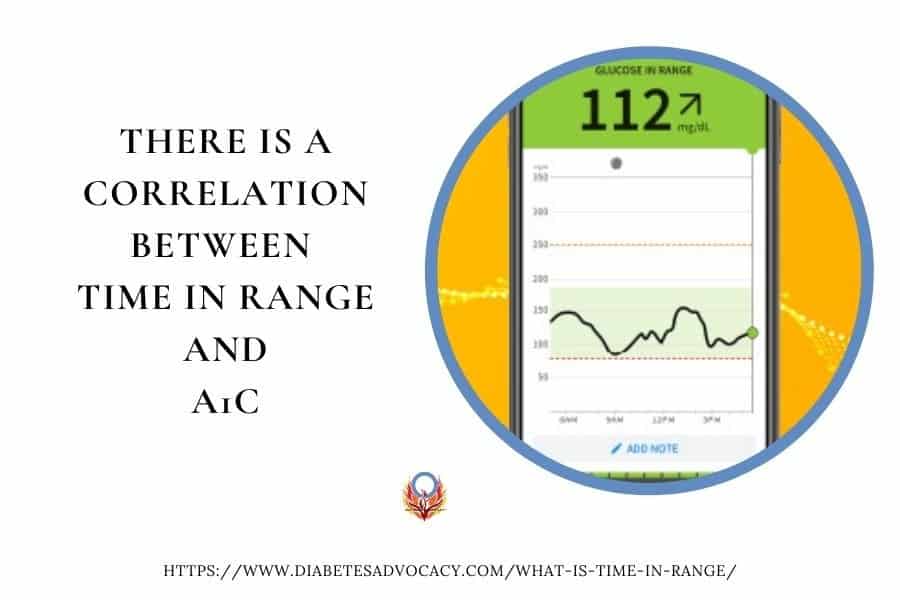
TIR and A1c

A 2019 article in Diabetes Technology Therapies found that there is a good correlation between A1c and Time in Range.  Time in range may become a preferred metric in determining the outcome of clinical studies, predicting the risk of complications, and assessing a person’s actual glycemic control.

Researchers have noted that one more hour per day of time in range can translate into improved health outcomes. Currently, the average person with diabetes will spend 50-60% of their time within target range. 

Who should monitor Time in Range?

Time in Range will offer the most benefit to improved glycemic control for people with type 1 or type 2 diabetes who use insulin and wear a continuous glucose monitor.

Learn about your continuous glucose monitor options.

CGM Options

How often should you be in range?

time in range

Goals for Time in Range can vary between patients.  It will depend upon things like carbohydrate intake, type of diabetes, age, overall health, and risk of hypoglycemia.

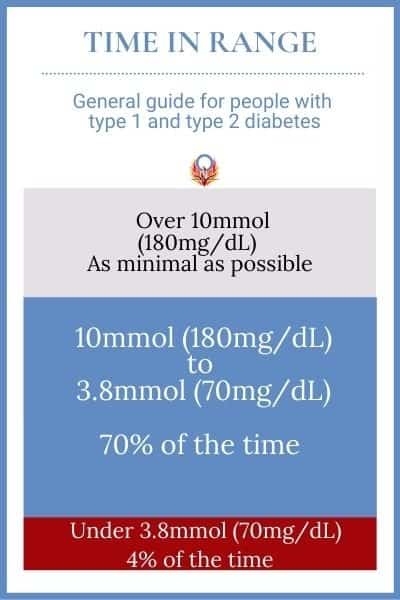
The International Consensus Panel on Time in Range has recommended that most patients with type 1 and type 2 diabetes should strive for a Time in Range of 70% or greater. Ideally, patients should also attempt to be low no more than 4% of the time and high as little as possible.

The Consensus Panel has gone on to suggest that the optimal blood glucose range should be between 3.8mmol (70mg/dL) and 10mmol (180mg/dL).  These numbers are primarily for research purposes, however.  Individuals should still use a range set by their diabetes team.

Other benefits
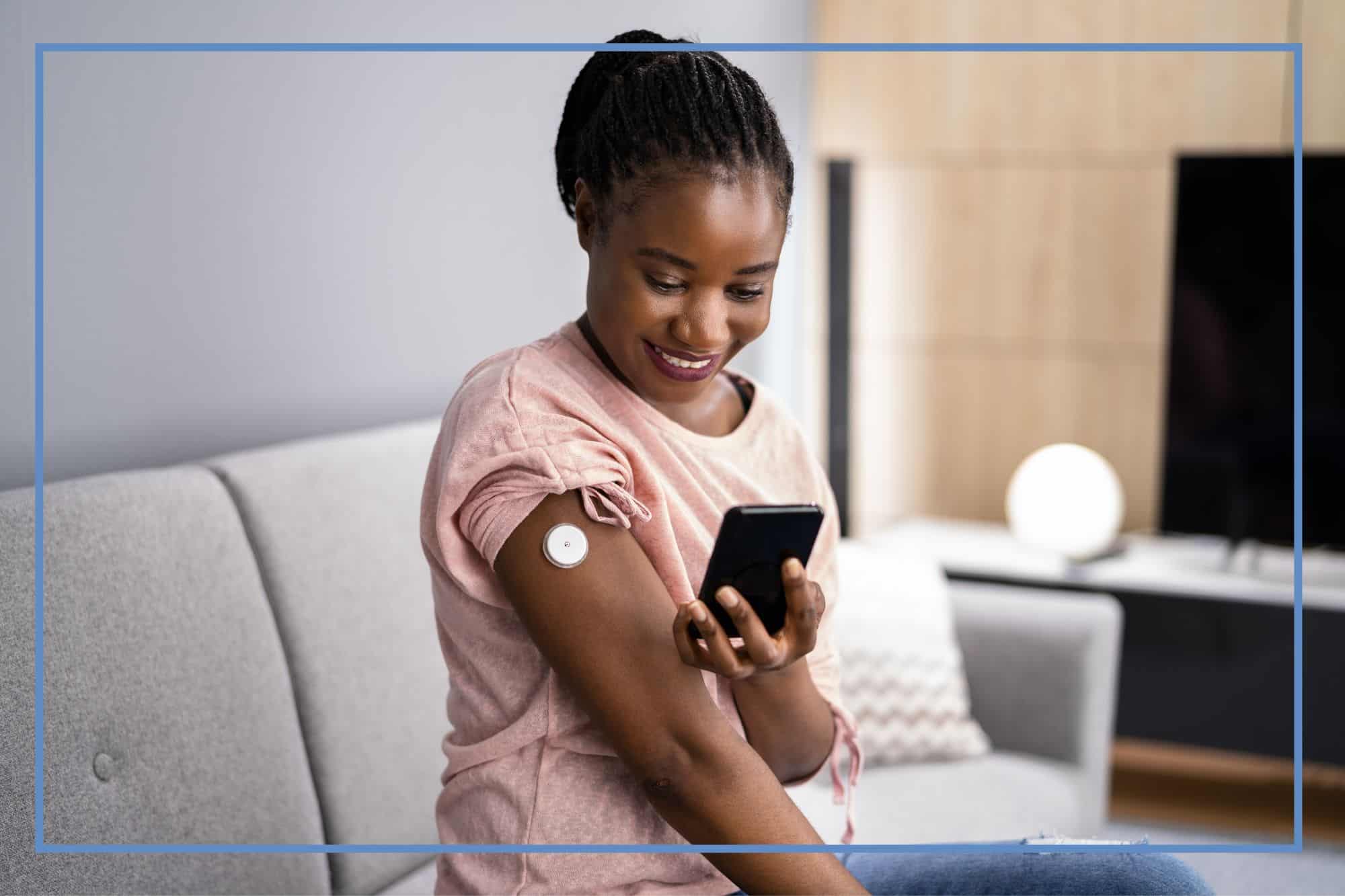
African American woman looking at her phone after scanning her Libre sensor

By using a continuous glucose monitor and the Time in Range data, it is easier to note things like undetected lows and prolonged highs. They can also make it easier to identify patterns caused by things like increased activity on weekends, or the impact of shift changes, menstruation, or sick days on readings. This allows clinicians to guide patients more precisely with diabetes in treatment alternatives.

How do experts feel about Time in Range as a measurement of diabetes health?
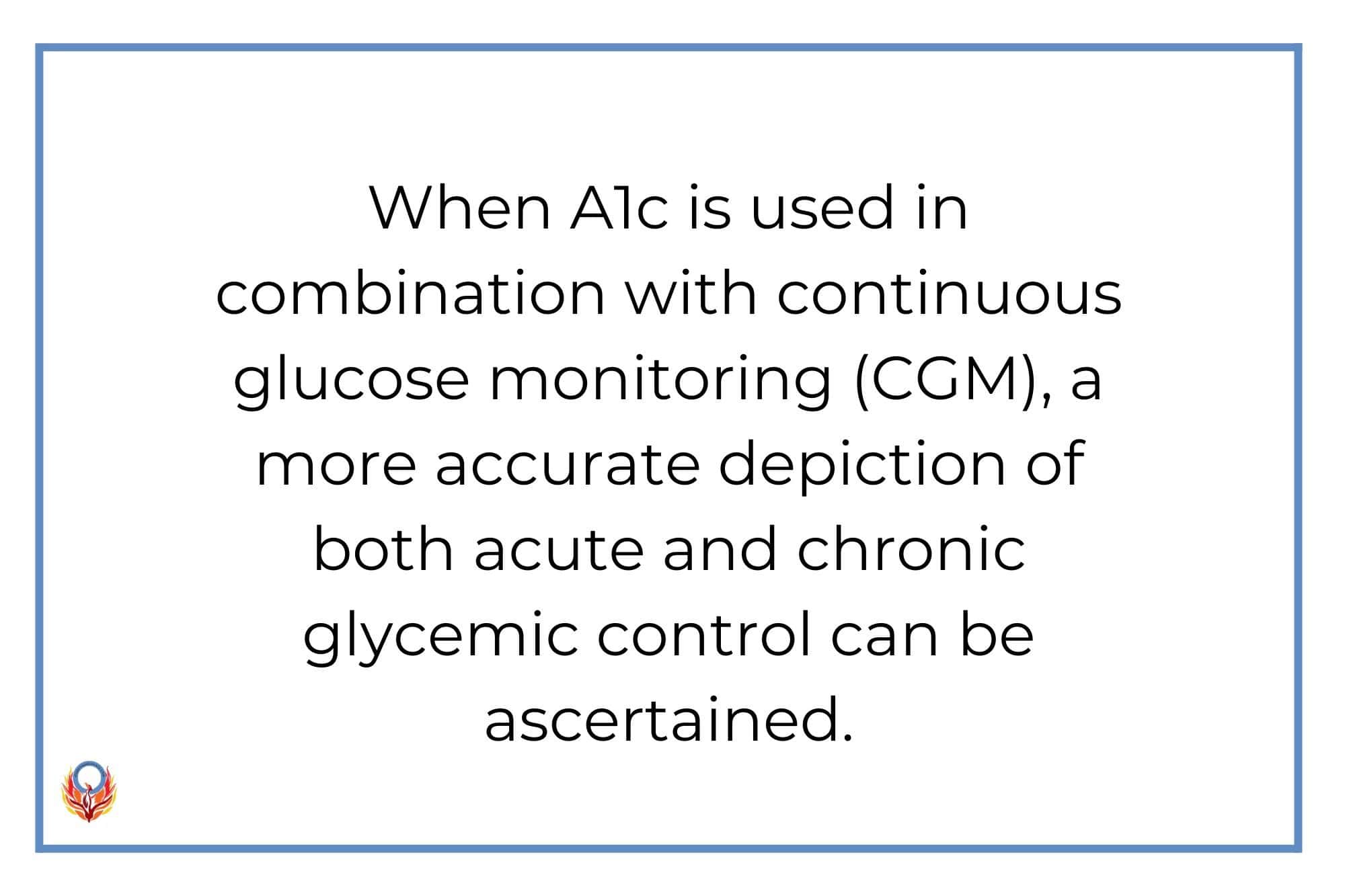
When A1c is used in combination with continuous glucose monitoring (CGM), a more accurate depiction of both acute and chronic glycemic control can be ascertained.

A December 2020 article in the Diabetes Journal stated that the A1c does have its limitations. It still is a relevant and valuable tool in assessing overall blood glucose control and the risk of complications, however. When A1c is used “in combination with continuous glucose monitoring (CGM), a more accurate depiction of both acute and chronic glycemic control can be ascertained.”

Time in Range shows glucose control over a period of hours or days. A1c, on the other hand, looks at averages over 8-12 weeks. Time in Range is not yet a fully recognized standard of measurement in diabetes care, but its value cannot be discounted.

Early studies already suggest that TIR can be a good predictor of long-term diabetes complications. The extent of the correlation between Time in Range and A1c is not yet fully apparent.  A retrospective analysis of 18 articles found that for approximately every 10% change in time in range, there was an .8% change in A1c but more data is still required to confirm this.

In a time of COVID-19, when access to blood testing has been restricted, the value of Time in Range has become a welcome tool for clinicians looking to help their patients with diabetes.
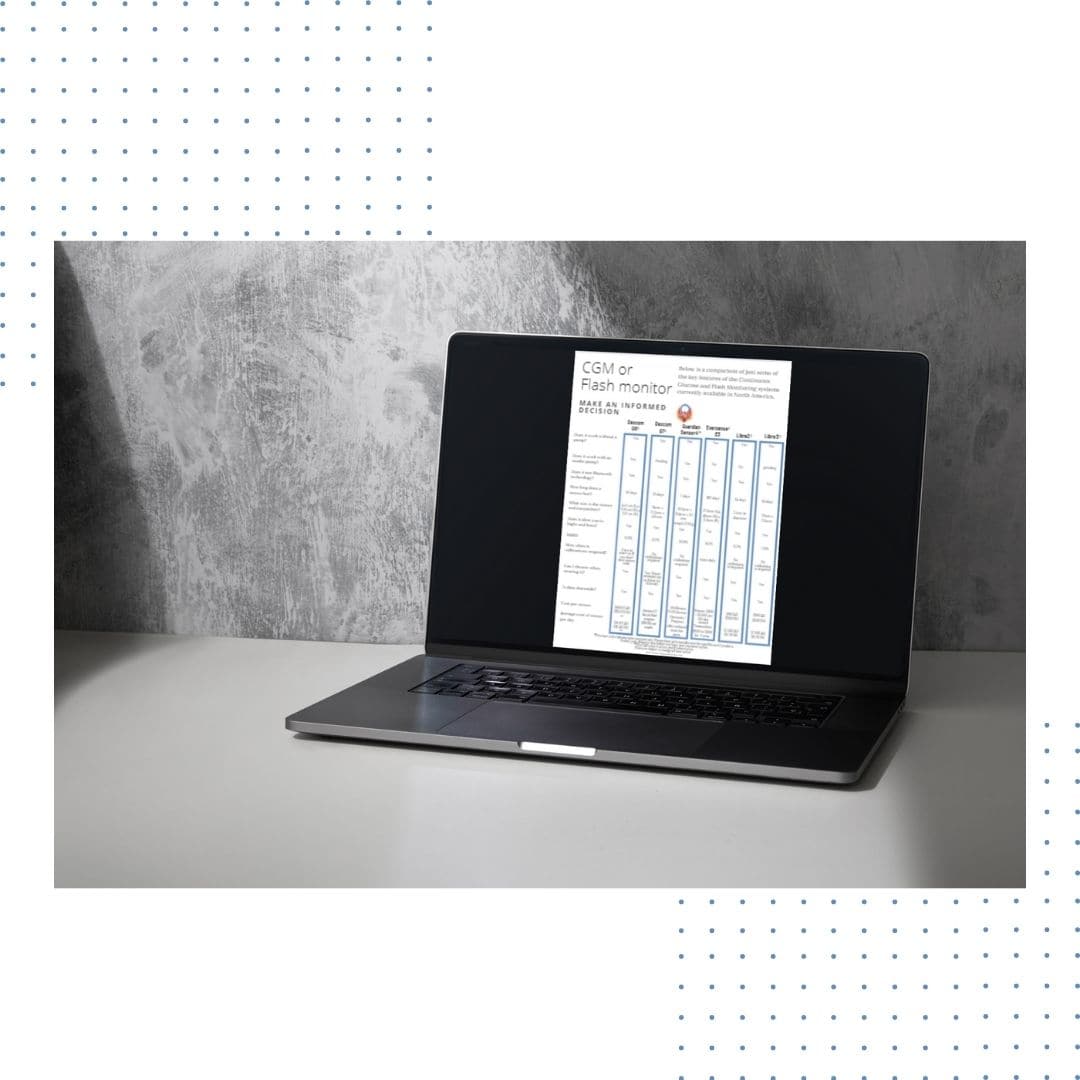
grey back drop. Laptop sitting open on while desk. On the screen is an CGM comparison chart from Diabetes Advocacy

Compare Continuous Glucose Monitor options

Access now.
Download chart
Time in Range when you live with diabetes

Filed Under: Diabetes Technologies Tagged With: a1c, Continuous Glucose Monitor, CGM, flash meter [post_date}

Reader Interactions

Comments

  1. Rick Phillips says

    April 9, 2021 at 10:12 pm

    I understand Time in Range but I so I like a number and A1C fits that bill. I wonder if there could be a mix and match scale. Like Time in Range is one part of the total neither T in R or A1c tell the whole story.

    Reply
    • Barb Wagstaff says

      April 14, 2021 at 10:01 am

      From what I am reading, they are looking at a combination. Two people can have the exact same A1c with very different time in range, so the idea is that Time in Range may help to narrow down issues. It seems like a great idea once more people have access to CGM.

      Reply
  2. Keith Patterson says

    April 13, 2021 at 9:51 pm

    Yes i lok at my TIR most nights at bedtime, and 30 average weekly.

    Reply

Leave a Reply to Rick Phillips Cancel reply

Your email address will not be published. Required fields are marked *

This site uses Akismet to reduce spam. Learn how your comment data is processed.

Get valuable information sent straight to your inbox!

Join Diabetes Advocacy's email list for great tips and information.

Please wait...

Thank you for joining us. We can't wait to get to know you!

Footer

Meet the creator

Hi there! I am Barb, the creator of the Diabetes Advocacy website. I began this site many years ago after my 2-year-old son was diagnosed with type 1 diabetes. Together we have grown and impacted lives around the globe! Read More…

Disclaimer…in case you didn’t already know…

I am not a medical professional but have played one in real life.

Please consult your medical team before making any changes to your diabetes care. This site does NOT replace medical advice.

You can read our complete disclaimer statement here.

Technology

  • CGM
  • Flash Monitors
  • Glucometers
  • Insulin pumps

Financial and Social Supports

  • Disability Tax Credit
  • Insulin pump programs
  • Social support
  • Other resources

About Us

  • Contact us
  • Our diabetes story
  • What others say
  • Our DTC story
Diabetes Advocacy

Copyright © 2026 · DiabetesAdvocacy · All material on this site is subject to copyright protection including text and pictures.

No portion may be reproduced without express written permission ·

This website uses cookies to improve your experience. We'll assume you're ok with this, but you can opt-out if you wish.Accept Read More
Privacy & Cookies Policy

Privacy Overview

This website uses cookies to improve your experience while you navigate through the website. Out of these, the cookies that are categorized as necessary are stored on your browser as they are essential for the working of basic functionalities of the website. We also use third-party cookies that help us analyze and understand how you use this website. These cookies will be stored in your browser only with your consent. You also have the option to opt-out of these cookies. But opting out of some of these cookies may affect your browsing experience.
Necessary
Always Enabled
Necessary cookies are absolutely essential for the website to function properly. This category only includes cookies that ensures basic functionalities and security features of the website. These cookies do not store any personal information.
Non-necessary
Any cookies that may not be particularly necessary for the website to function and is used specifically to collect user personal data via analytics, ads, other embedded contents are termed as non-necessary cookies. It is mandatory to procure user consent prior to running these cookies on your website.
SAVE & ACCEPT