
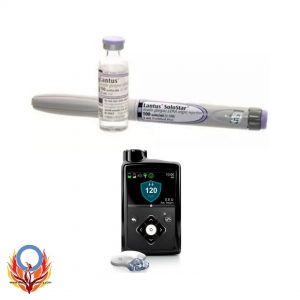
Let’s discuss the pros and cons of insulin pump therapy. Personally, I love pump therapy. I think that it is the best way of delivering insulin, BUT it is not the only way AND it is not for everyone.
Again, insulin pump therapy is not for everyone. Some people really don’t like using an insulin pump for personal reasons and still have fabulous success in managing their diabetes care. Check out Ginger Vieira and Christel Oerum for great examples.
Whether you get your insulin through a pump or a pen or a syringe, it is important that you weigh out the pros and cons of each therapy type. You must find the insulin delivery method that best suits your lifestyle.
Here are a few of the pros and cons that we have come across when it comes to using an insulin pump.
The pros of using an insulin pump
1. Less Jabs

Infusion sets for insulin pumps only need to be changed every 2-4 days depending on the type of set used. While you may still require emergency site changes or an injection to bring down a stubborn high, you will still only use one or two injections vs multiple daily injections.
2. Flexibility with food

When using an insulin pump, you only use rapid-acting insulin. This means that you don’t have to have snacks or meals at specific times. Ideally, you don’t have to feed your insulin when using an insulin pump. You eat what you
3. Flexibility to exercise

You can adjust your background insulin to increase or decrease based on your anticipated activity level. Some sensor-augmented insulin pumps will even suspend your insulin delivery if your blood glucose levels are dropping too low or too rapidly.
4. Can be integrated with your CGM
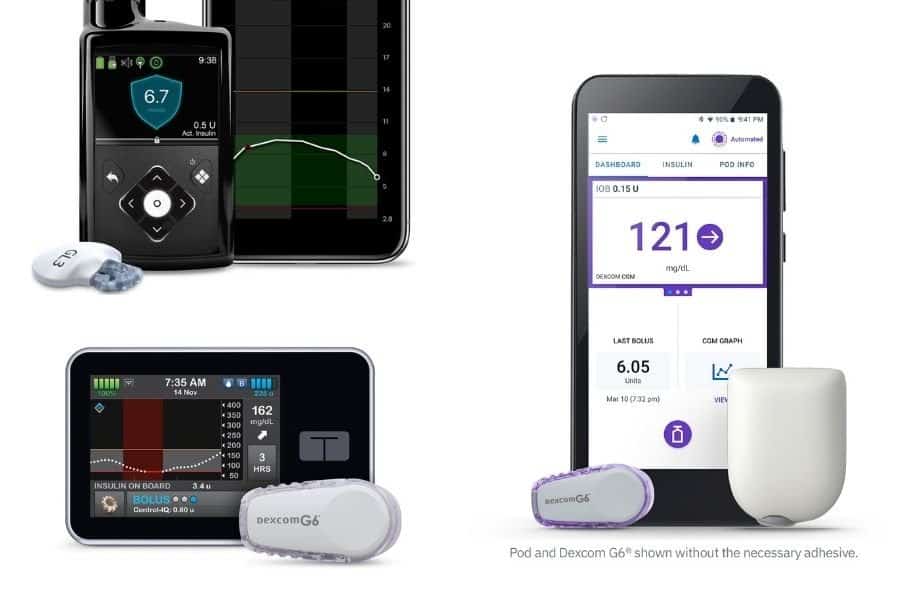
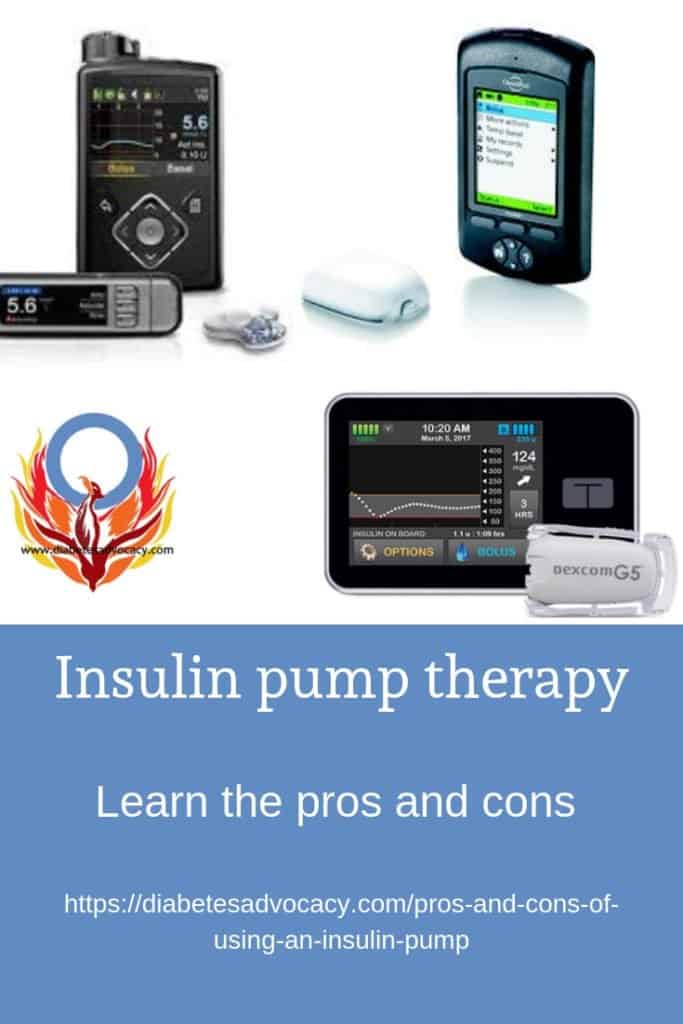
There is currently a category of insulin pumps that are “sensor-augmented”. This means that they can receive information from specific continuous glucose monitors. This information is then used by the pump to help you make dosing and basal decisions.
5. Micro-manage your blood sugars
An insulin pump allows you to make small corrections to your blood sugars. The ability to dose fractions of a unit of insulin without injections gives you the flexibility of great control with greater ease. It allows you to tailor your insulin needs to your lifestyle rather than the other way around.
6. Reduced episodes of severe hypoglycemia

Insulin pumps deliver small amounts of rapid insulin on a constant basis. There is less variance in absorption rates and ultimately a reduced incidence of extreme hypoglycemia.
7. No peaks to chase
Again, because insulin pumps only use rapid-acting insulin, there are no peaks of insulin that need to be chased with food.
8. Built-in dose calculator
You don’t have to do the math. Your insulin pump will help you to figure out how much insulin you have left in your system and how much more insulin you will need to cover a meal or bring down a high bg level.
Know the questions to ask when researching insulin pumps.
The Cons of using an insulin pump
1. You are attached to something 24/7
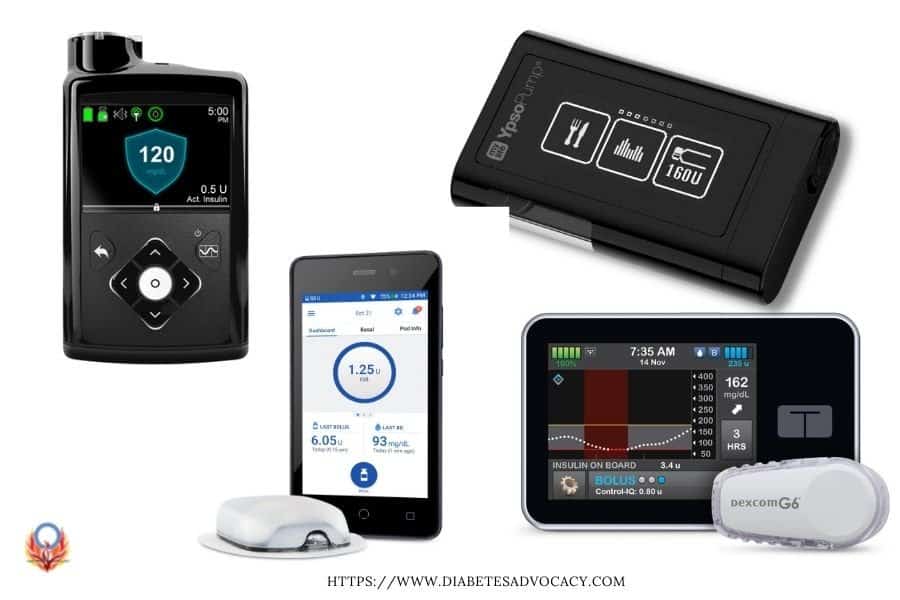
Whether you are tethered to an insulin pump directly or just having to have a PDM nearby, you and your pump are attached…always. There is no taking it off or leaving it behind unless you have gone back to at least some form of injection therapy.
2. You can’t tell if the insulin has been delivered properly or not
Infusion sets can kink inside the body. You can’t tell until your blood sugar levels start to spike for no apparent reason.
3. They cost a lot of money

Not everyone has great insurance coverage. Not every region offers public programs that pay for insulin pumps. If you must pay for an insulin pump and then the supplies out of your own pocket, it can be a costly venture.
4. Changing an infusion set takes more effort than an injection
To change an infusion set, you must prep the site, fill the tubing with insulin, inject the infusion set into the body, connect it to the tubing and fill the cannula, that is now under the skin, with insulin.
5. Increased risk of DKA
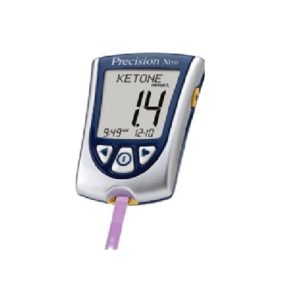
An insulin pump uses only rapid acting insulin. This means that there is no background insulin in the body if there is a pump failure. Without the background insulin, there is a greater risk of DKA. A person using an insulin pump should be monitoring their blood glucose levels more closely and checking for blood ketones when readings begin to climb.
6. Increased risk of infection
Because an infusion set stays in the skin for a period of 2-4 days, there can be an increased risk of infection to the sites. Therefore, site rotation and proper skin prep is vital when using an insulin pump.
Make an educated choice
Choosing to inject or use an insulin pump should be a choice that you make based on your needs and comfort level. Before you decide, spend time speaking with your diabetes team and take time to educate yourself.
If you decide to use an insulin pump, again, choose the insulin pump that is right for your lifestyle. To help you decide what is right for you, download our eBook. It has a checklist of features that will help you decide what is important to you. It also has a list of questions that you can ask your pump reps before making your choice.
Remember that all pumps come with some sort of guarantee. Ask your pump rep what their return policy is before you purchase. Your insulin pump is a 4-5-year investment. You don’t want to have buyers’ remorse.



We have a friend who has been a diabetic for no more than 3 years, she was telling us that her doctor wants her to get a pump, but she said no because the tubing would be permanently inserted in to her kidneys. I have never heard of anything like that. I’m thinking she has gotten the pump mixed up with something else. The only thing I know of is a tube they put in your arm for dialysis, but not into the kidney. My younger sister had 1 inserted into her left arm for her dialysis. If someone know the answer could you post it. I’m just a little curious of what it could be. my thoughts are the woman is crazy, she takes her insulin with no food insight or treats her lows with a insulin injection and her highs with food. I tried to tell her it the other way, but all she says is my diabetes is not her diabetes, which I agree with, because I would have been died 37 years ago if I was her diabetes.
Wow. I have no idea what she is thinking about but an insulin pump is attached with a small cannula that sits under the skin for 2-3 days. It is changed out on a regular basis but never is it permanently inserted anywhere.
As for the way she manages her diabetes care, hopefully, she has a good team that is able to help her get on track with her management tools.
Medtronic Extended Wear Reservoirs and Extended Wear Infusion Sets are reengineered to last for up to seven (7) days. Improved reservoirs and tubing maintain insulin effectivity for a week under usual conditions.
If needed, change reservoir only. Fewer set changes helps site healing and less time changing them.
For me site changes are now weekly.