
Maintaining good eye health is especially important for those living with diabetes. High blood sugar levels can damage the small blood vessels in the eye.
While changes in vision can be an early warning sign of diabetes, your vision can also change at any point after being diagnosed. Symptoms of those changes can sometimes be so mild that people may not even notice them at first. It’s important to remain aware of these signs and symptoms related to your eyes to make sure you can get the help you need before they create lasting damage.
Be aware of warning signs about your eye health.
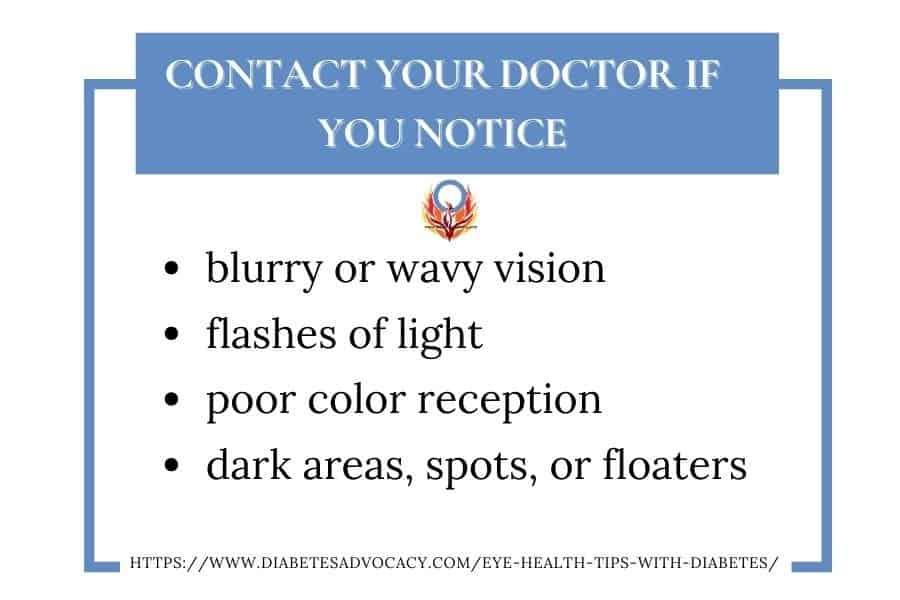
Fluid levels in your body can make your eyes swell up, changing their shape and ability to focus. High blood sugar can also lead to more serious vision problems like cataracts, glaucoma, and retinopathy. In fact, diabetes is the primary cause of blindness in adults ages 20 to 74. People with diabetes should always be on the lookout for changes in their vision. Watch out for things like blurry or wavy vision, flashes of light, poor color reception, and dark areas, spots, or floaters.
Good eye health with diabetes includes monitoring blood sugar levels
According to the American Diabetes Association, cataracts cloud the lens of the eye. Glaucoma can create a build-up of pressure in the eye. Retinopathy can affect the blood vessels in the back of your eye. The development of these eye diseases depends on your:
- Blood sugar levels
- Blood pressure levels
- Type of diabetes
- How long you’ve had diabetes
- Genes
People who keep their blood sugar and blood pressure levels at a normal range are less likely to develop these eye diseases or will have more mild conditions. You can get help managing your blood sugar levels by using a diabetes app like mySugr, which has blood sugar level graphs and daily, weekly, and monthly reports that you can share with your doctor.
Almost everyone with type 1 diabetes will develop non proliferative retinopathy, and the majority of people with type 2 diabetes will develop it as well. Proliferative retinopathy, which is far more serious, is less commonly developed. The longer you’ve had diabetes, the more at risk you are for developing an eye condition. You should therefore increase the number of annual eye exams you get as you age.
See an eye doctor regularly
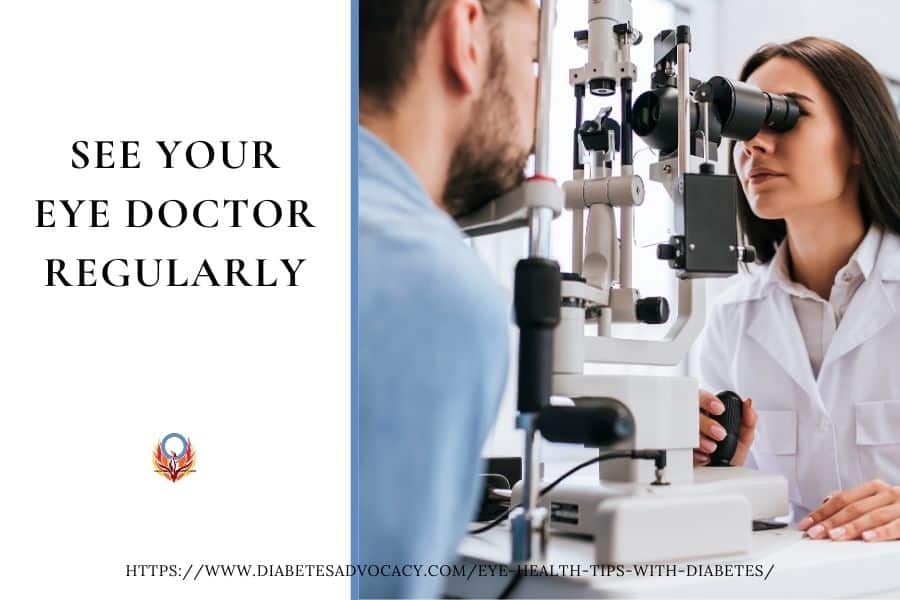
People with diabetes who wish to maintain optimal eye health should see an eye doctor for a full eye exam every year. It’s possible to have eye damage without realizing it. Regular check-ups with an eye doctor can help to diagnose eye diseases in their early stages to prevent blindness. While people with diabetes have a higher risk of blindness than those without it, they typically only experience minor eye disorders over time.
Types of Eye Doctors
There are multiple different kinds of eye doctors available to patients, including opticians, ophthalmologists, and optometrists. People with diabetes will want to schedule an appointment with an ophthalmologist or optometrist because they specialize in eye disease. Opticians only fill prescriptions, or adjust and repair glasses, frames, and contacts.
An ophthalmologist is a medical doctor who can treat all eye diseases and severe eye problems. They can also prescribe glasses and contact lenses if needed.
An optometrist is not a medical doctor. He or she can still treat certain eye conditions and diseases, and prescribe glasses and contact lenses as well!
Follow treatments suggested by your eye doctor
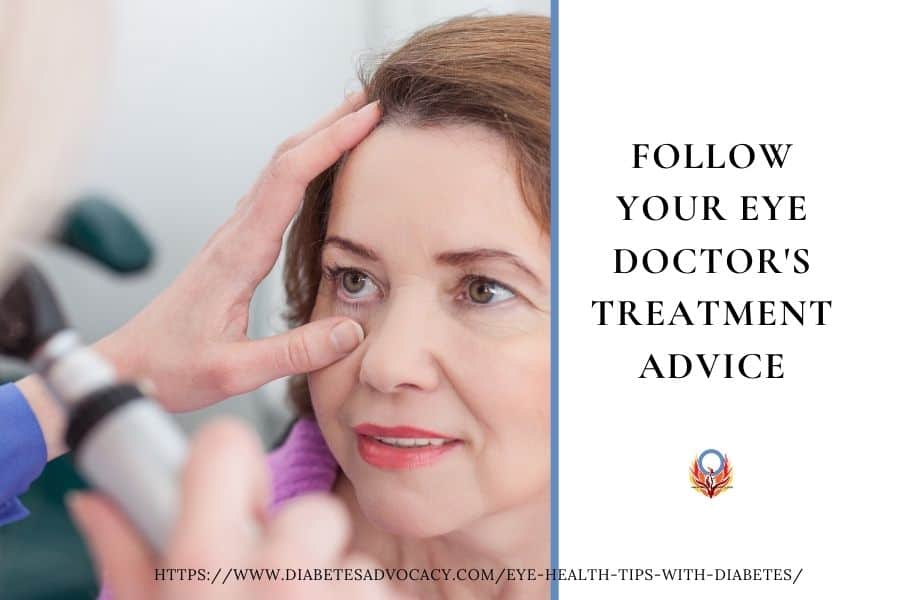
If an ophthalmologist or optometrist examines your eyes and finds any issues, they will suggest some kind of treatment, surgery, or optical lens.
People who begin to develop blurry vision because of high blood sugar from diabetes need to see an eye doctor as soon as possible. They can determine if this is a symptom of a more serious problem.
If the blurriness is from high blood sugars, you need to return your blood sugar back to its target range to correct your vision. This can take up to 1 to 3 months. During this time, you can purchase eyeglasses with the right prescription to combat your blurred vision until it returns to normal. You should continue to speak with your eye doctor until the condition subsides.
People who develop more serious conditions like cataracts, glaucoma, or diabetic retinopathy will need more extensive treatment. Anyone can develop cataracts, but people with diabetes tend to develop them earlier and faster. To correct cataracts, an eye doctor will have to perform surgery to remove the cataract and replace it with an artificial one.
Treatment for glaucoma depends on the type. Open-angle glaucoma is the most common among people with diabetes and can be treated with medication. Neovascular glaucoma, a more serious form of glaucoma, calls for surgery or laser treatments, which can help lower eye pressure.
Diabetic retinopathy, or diabetic eye disease, can cause vision loss if left untreated. Keeping tight control of your blood sugar levels with an insulin pump or multiple daily insulin injections can reduce the chance of developing this condition. If you do develop retinopathy, your eye doctor will keep track of your eyes for 2 to 4 months with comprehensive eye exams. Should the condition worsen, they will likely suggest injections, laser treatment, or eye surgery.
Protect Your Eyes

Another simple way to protect your eyes is to wear sunglasses. Ultraviolet exposure can contribute to cataracts, macular degeneration, and more. UV rays cause the protein in the lens of the eye to clump and thicken. This prevents light from passing through. You can reduce your risk of developing an eye condition by wearing UVA and UVB sunglasses to shield your eyes from harsh UV rays.
Developing an eye condition due to diabetes is common, but it doesn’t have to be serious. If you follow the tips above you can still maintain very healthy vision throughout your life!



I just had cataract surgery and the outcome has been tough. I still get my eyes examined every six months, not because i have too, but rather because my mom was blind as a result of diabetes. so far 46 years and so good for me.