

Many people with diabetes have a debilitating fear of hypoglycemia. Hypoglycemia is the medical term for low blood glucose or low blood sugar levels. Symptoms can include weakness, dizziness, feeling hungry, or irritability. In some cases, there can be no symptoms at all. If left untreated, a low blood sugar can lead to a coma or death.
Why parents of children with diabetes have a fear of hypoglycemia

As a parent of a child with type 1 diabetes, I would often wake in the middle of the night to check my son’s blood sugar levels. Sometimes I would only wake once, other times I would wake more often. In my mind, if I woke up during the night there was a reason. My son might be in danger.
When my son was younger and still living at home, continuous glucose monitors were not readily available or as widely used as they are now. I had no way of knowing if he was high or low unless I got up and took a reading.
If I woke up and didn’t check his blood sugar I would begin to panic when I woke up again. I would lay in my bed heavily burdened by the guilt of daring to sleep. The “what if’s” would begin….
- What if he did drop lower while I selfishly slept?
- What if he went so low in his sleep that he seized while I dreamed of peaceful walks?
- What if he couldn’t wake up when I finally did go to check on him?
- What if he went so low that he had brain damage?
- What if my sweet, quirky young son was hurt because of my selfish desire to rest a little longer? I would never forgive myself!
These are just some of the things that parents of children with diabetes think of when they should be resting or waking refreshed. Studies have shown that nearly one-third of pediatric parenting stress appears to be associated with their fears related to hypoglycemia.
Why people with type 1 diabetes fear hypoglycemia

As parents, we are terrified that we will fail our children and not wake up to help them. People with diabetes often fear being alone when a hypo strikes and not being able to help themselves. They may run their blood sugar levels higher than they should just to avoid a dreaded low.
Fearing hypoglycemia is completely normal.
Whether you are a parent or a person with diabetes, fearing hypoglycemia is completely normal and understandable. We know that diabetes is deadly and that dead in bed happens. The problem is when fear becomes overwhelming.
What to do when fear takes over your life
For parents, crippling fear can result in things like co-sleeping with the child to the determent of a marital relationship or staying awake at all hours and impairing their own health. For people with diabetes, it can mean running their blood sugar levels too high and potentially causing complications.
There are a number of things that you can do when your fear of hypoglycemia begins to take over your life.
It is normal to have some fear of going low.
Remember that fear of hypoglycaemia is a normal response to a threat, and a certain amount of fear is okay. It will help to keep you alert for hypoglycaemic symptoms. Extreme or overwhelming fear, however, is a problem because it can compromise your diabetes management. As I said above, it can also impair your quality of life, and even the lives of your family members.
Analyze the data for answers
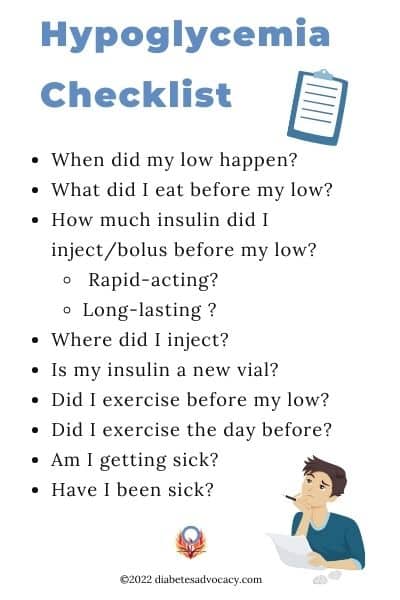
Systematically try to think about the underlying cause of the low that is causing you anxiety. Look at what is causing the low blood sugar, and how can it be avoided in the future?
Consider increasing the amount of time that you are checking your blood glucose levels or invest in a glucose sensor if you can afford it.
Log the readings in a logbook or use the software available through the glucometer or sensor company to look for patterns.
Work with your healthcare team to further help you understand the cause of your lows. Once the reason is understood, changes can be made to the diabetes management routine to help prevent lows.
Consult your diabetes team
Again, it can be really important to consult with someone on your diabetes team. Together you can work out strategies for this like how to avoid a low during a work presentation or on a first date. Being prepared can help reduce your anxiety.
What to do if the fear of hypoglycemia becomes crippling
If your fear of hypoglycemia or worry about going low becomes crippling, preoccupies your thoughts, fills you with anxiety or you begin to organize your life (or the life of your child) to avoid them happening, it is important to talk to someone. Your diabetes team may be able to recommend a cognitive behavioural therapist or other mental health professional. You may require new strategies to help you to reduce your anxiety to help you cope.

Managing your mental wellness
Tools to help your mental well-being


Oh, been there, done that Barb. And I agree about the dreaded, middle of the night 5!! A 4 you know you need to deal with. A 6 is probably fine. But a 5?? Which way will it go?? And I think we will always have those feelings of panic and guilt as long as our kids are under our roof. And probably even more panic once they’re not…
Agree with that statement, more panic once they’re not. Personally, if 90, I either give a bit of juice to bump her up or reduce temp basal for two hours, just a tad. If I know in advance I am too tired to make it through. There have been many times when I sleep through intending to get up. If your body is too tired, it can sleep through multiple alarms. I try to make sure I get some rest somehow, one of my top priorities, during the day or even early evenings. I wonder how these kids are going to do it and hold down a full-time job. I have read on this topic on some of the adult blogs and the consensus seems to be that most of them don’t do night checks. I can only hope it is because they become more stable overnight once the growth hormones stop. At least I hope that’s why.
In 46 years I have never once been afraid of lows. Maybe it is because I grew up around them or perhaps I have always come to of them, but being low is not an issue for me. My wife however is scared to death. So in deference to her, i am conscious of them. But my risk tolerance is way more than hers. 60 to me is time for action, 60 to her is call the paramedic. We have been married for 43 years so i doubt either will change, — find coexistence