
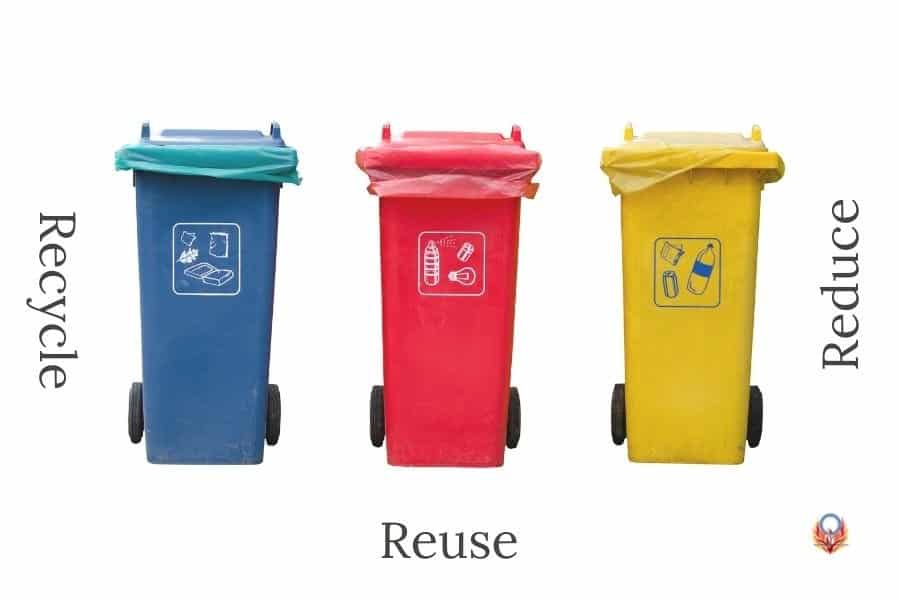
Whenever we have changed a site or try out a sensor, I have looked down at the pile of trash and feel incredible guilt. There seems to be so much “stuff” that we are putting in the garbage can. It can’t possibly be good for the environment. In an attempt to protect the world for my future grandchildren, I searched for some way to reduce our diabetes waste. Here is what I found.
Buy in bulk

If you are purchasing those travel sized packages of glucose tablets, you may want to consider buying the larger bottles. You can also go to your local Bulk Barn or Walmart and purchase low blood sugar treats in bulk. If you do this right after Valentine’s Day, Easter, or Halloween, you can usually score even more treats at a way lower price!
Once you get your glucose tablets or other low treats home, you can then break them down into properly portioned, travel sizes in reusable containers. Those old glucose tablet bottles can be great for this.
Recycle the cardboard
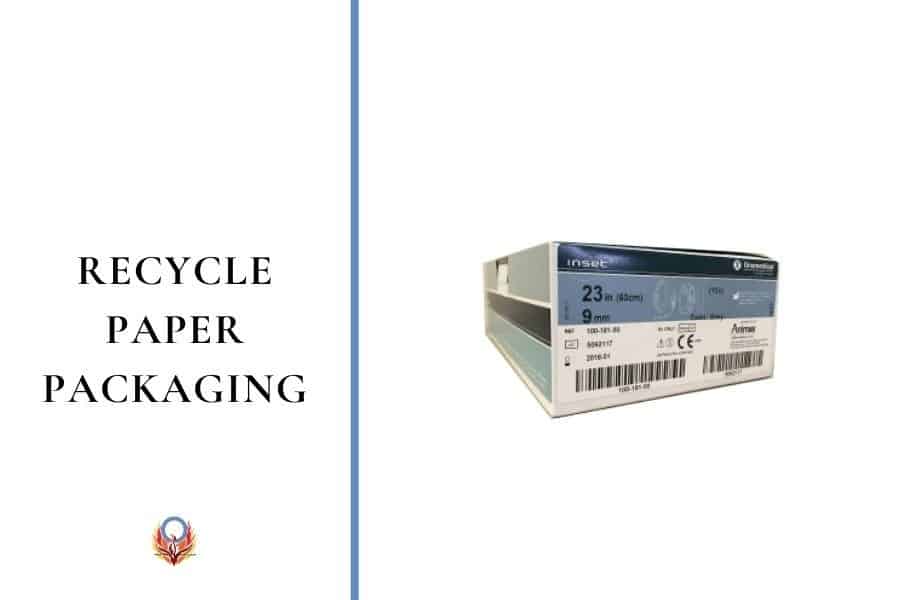
Test strips come in boxes. Insulin comes in boxes. Infusion sets come in boxes. You get the idea. There are a lot of boxes when you live with diabetes. The great news is that most boxes and paper inserts are recyclable. Simply break them down and place them in your cardboard recycling container.
Drop off electronic diabetes devices for recycling
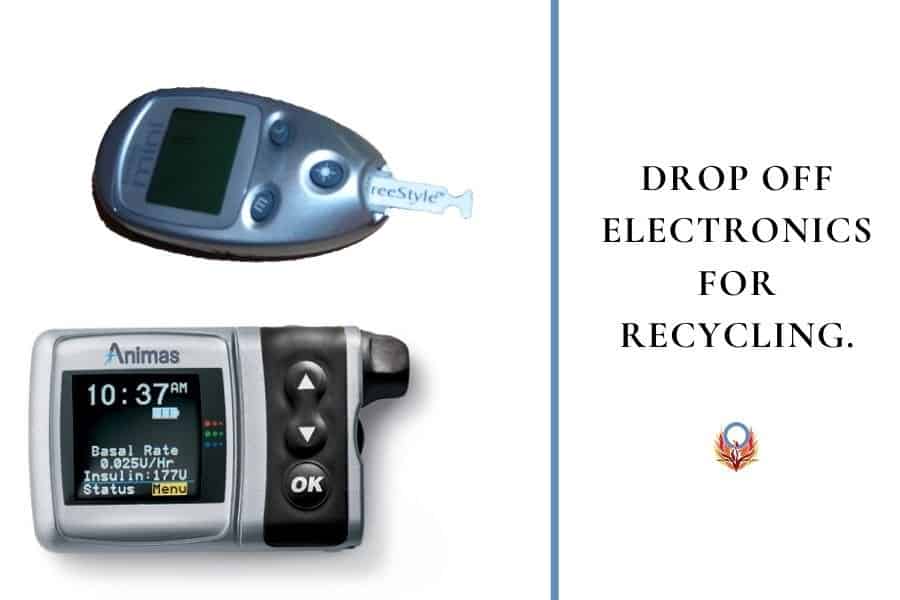
Did you know that often your old glucometer and DexCom can be returned to a recycling depot? I didn’t! You no longer have to have a dead meter collection in your drawer because you worried about throwing them in the trash. Most will be accepted by your local e-waste or e-cycling drop-off center. If you aren’t sure of a location in your area, you can also go to Earth911.com for the nearest recycling location.
Reuse tubing and other diabetes waste materials

If you are using an insulin pump, you already have come up with some great ways to reuse your tubing. Young children love it when you snip the ends off of infusion set tubing and then let them string beads. They can spend hours making cute bracelets and more!
If you don’t have littles around, don’t worry, for those of you who like to garden, tubing is perfect for holding up plants!
Test strip bottle and insulin vials have many uses in creative art projects. Test strip bottles can also be perfect storage containers for thumb-tacks and other small items. Think about all of those things that you used to store in film containers and now you can put them in test strip bottles!
Test strip bottles also make great portable sharps or waste containers when you are traveling.
Check out Pinterest for more creative, upcycling ideas!
Recycle some of your diabetes waste products
After a bit of investigating, I did find that some diabetes supplies can be put in your household recycling bins.
Syringe caps can be recycled in areas that recycle bottle caps. The tops of the built-in inserters on inset®, insetII®s, mio®, Mio30®, Autosoft90® and Autosoft30® are all pieces of diabetes waste that can be recycled. Please ensure proper disposal of the insertion needles, however.
Dexcom applicators currently cannot be recycled.
Donate your extra supplies

If you find that you have supplies that you no longer need don’t throw your diabetes waste in the garbage. Instead consider donating your unused supplies to people and organizations in need. There are often people in Facebook groups who can use assistance. Your local pharmacy may know of someone without insurance who could use a break. There are also international organizations like Insulin for Life that distribute supplies to those in need.
How much waste does diabetes generate?
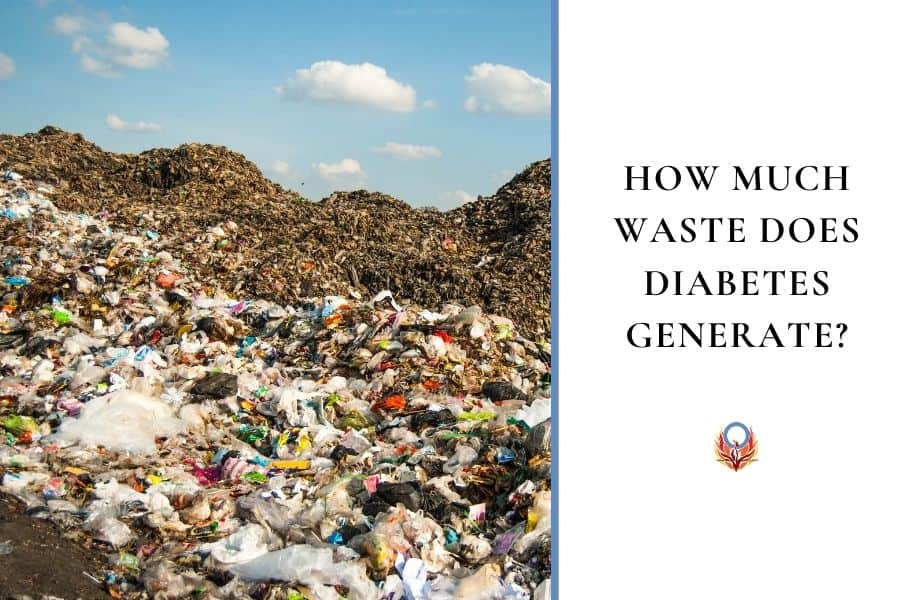
If you are like me, you may still feel like there is a lot of waste in diabetes care but I was surprised to read a study that showed that there may not be as much as we think. A person consuming one soft drink or one beer in a can only every three days has a similar impact on the environment as eleven insulin pump patients using one infusion set each in the same time period. Let me repeat that….one beverage can every three days creates the same amount of waste as eleven pumpers who use one infusion set each!
A person using a tubed insulin pump in fact only produces the same amount of environmental waste as a person who purchases one cup of coffee per day. Mind-blowing.
As great as that makes me feel, by using the tips above, we can further reduce the environmental impact of diabetes waste.
What else do you do to reduce your diabetes waste?


Oh I am so with you here. I hate that waste pile I see every three days. I am certain manufactures can do a much better job. We patients have to demand it.
This is an issue that i have spoken to my diabetes educator, my personal tandem/dexcom instructor, and to customer support as well as to amount of (dangerous) waste.. I have only been on 6 or 8 months, but i still have all the sensor applicators, and infusion sets and applicators. I threw away cartridges and syringes with needle cartridge removed, but have the rest in their original box in my room. My pen needles, spent pens, lancets, strips and syringe cartridges go in heavy plastic bottle then to dump. So much stuff! What do i do?
I agree! There is a crazy amount of waste. Some companies are looking to reduce this (Omnipod has a recycling program), but most are sadly lacking. You can occasionally break down a few pieces to recycle but reusing items in new ways seems to be the only other alternative. Even reuse seems to be heavily reliant on a strong imagination unfortunately. Keep pressuring the companies to be more responsible.
While I’m all for making supplies more recyclable, I think it’s unfair to say the manufacturers are “irresponsible”. Continuous glucose monitors and pumps are still in their infancy. Maybe one has to be as old as I am and have had T1D since the ‘70s to appreciate how far we’ve come. And the first priorities are accuracy, reliability and ease of use. It’s hard enough to get equipment like this approved by the FDA. I’m amazed at some of the creative ways designers have made applicators, reservoirs, etc. simple to use and still meet tight specifications. Ecology will come but we would probably be complaining if these devices were delayed in order to make them perfect in every way. I’m just glad I have this technology at all. I’ll make up for the waste by recycling extra hard and taking shorter showers. ????