
No one likes to get sick. We take our vitamins, use proper handwashing techniques and get our flu shots all to avoid getting any of the colds and flu bugs lurking around. Despite our best efforts, many of us will still find ourselves under the weather. That is why it is important to keep your sick day protocol nearby so that you know how to manage your type 1 diabetes when you are sick.
When you were first diagnosed with diabetes, your clinic or doctor probably gave you a huge packet of information. Besides telling you about high and low symptoms and when to take your insulin, there was most likely also a detailed sheet on what to do when you get sick.
Here are some of the things that you need to remember if you are sick and have type 1 diabetes.

Below is general information regarding sick day management. It is not meant to replace the advice of your healthcare professional. Should you require further information regarding your condition or treatment, PLEASE speak with your healthcare professional.
Take your insulin
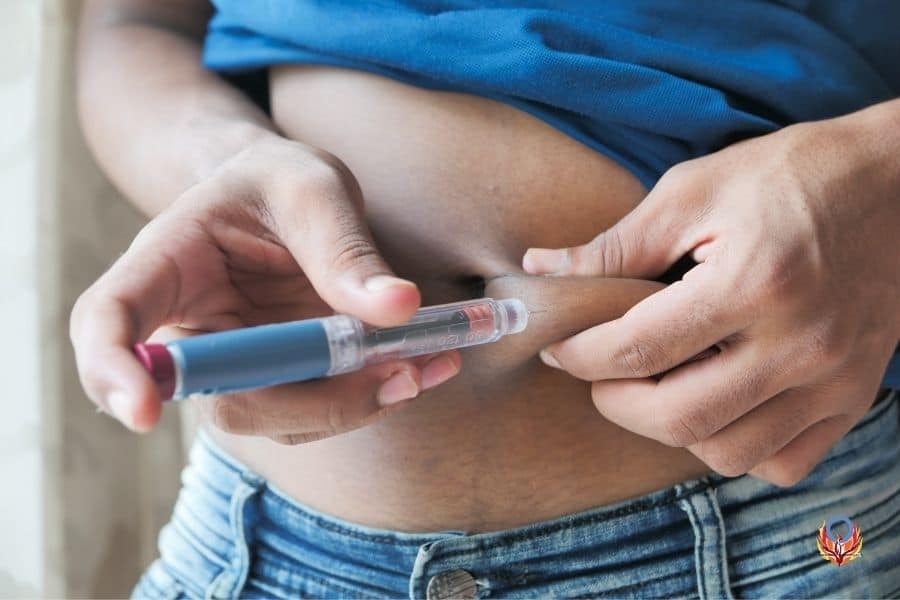
If you are sick and even vomiting, it is important to continue to inject your insulin. As your body works to fight the bug, your blood glucose levels will often run higher than normal and insulin will be vital to keep your readings in check. If you are on an insulin pump, you may have to temporarily increase your basal rates.
If you are unsure of how much insulin to take or how much of an increase you need, remember to check the sick day protocol prescribed by your diabetes team or contact your doctor for specific instructions.
Try to stick to your meal plan or get some solid foods into your system
If you are on a specific meal plan, try to stick to you if you can. If you are having trouble eating, try bland foods like unsweetened apple sauce, regular gelatin, toast, or crackers. Should you be unable to stomach bland foods, try clear soup or bouillon that contain salt.
Should vomiting continue for any amount of time, contact your doctor to see if he/she would advise the use of products such as Gravol or Zolfran. They may be able to reduce nausea.
Stay hydrated

Staying hydrated is a huge thing for anyone but especially for those living with diabetes. Try to drink 6-8 ounces of fluids every hour. Switch back and forth between drinks that contain sugar and drinks that do not. For example, for one hour, drink regular fruit juice and soft drinks. The next hour, drink sugar-free soft drinks, tea, or water.
If you are unable to keep liquids down, contact your doctor or head to the nearest emergency rooms for IV fluids.
How to handle low blood glucose levels when you are nauseous
Rescue doses of glucagon can be used to help bring back up blood glucose levels when a person with diabetes is unable to consume or absorb carbohydrate because of nausea, vomiting or diarrhea and blood glucose below 4 mmol/L or 72mgdL.
Contact your doctor or diabetes team to see if they recommend the use of rescue glucagon when ill.
How to use rescue doses of glucagon
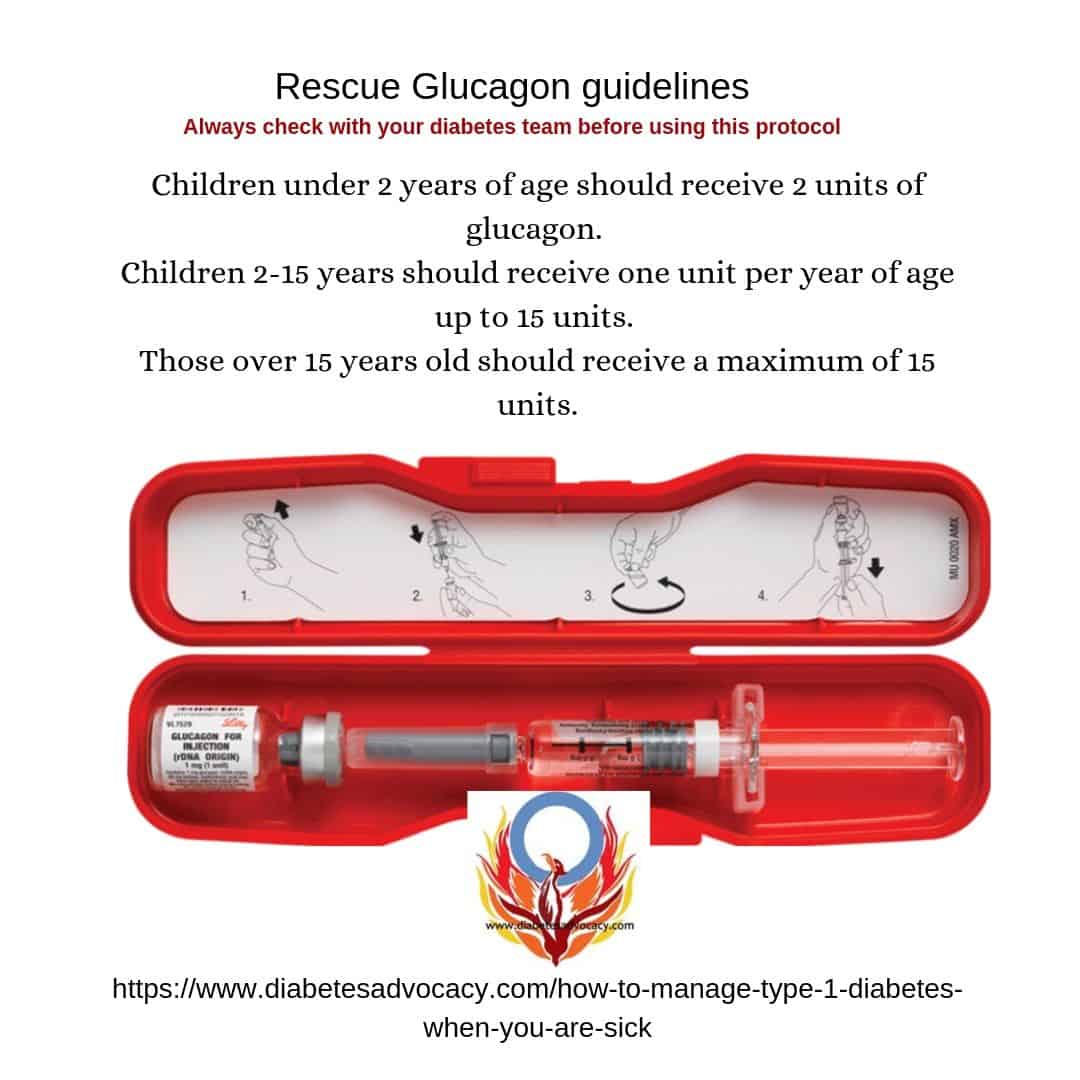
According to the instructions from the ADA, you should draw up your mixed glucagon in a standard U-100 insulin syringe.
Children under 2 years of age should receive 2 units of glucagon. Children 2-15 years should receive one unit per year of age up to 15 units. Those over 15 years old should receive a maximum of 15 units. Always check with your diabetes team before implementing this protocol.
Blood glucose levels should then be monitored every 30 minutes for the first hour and then hourly after that. If the blood glucose levels have not raised over 5.5 mmol/L (100 mgdL), you can repeat the process. Discard any glucagon not used within a 24 hour period. If blood glucose levels are still not responding, seek medical attention immediately.
When should you check for ketones
Be sure to keep a close eye on blood glucose levels when you are sick either on your Continuous Glucose Monitor or through regular finger pokes. If you have had consecutive high blood glucose readings or are vomiting, you should check for ketones. This can be done through blood ketone strips or by using urine on keto strips. While the urine strips are less expensive, there is also a time lag in results. For quick and accurate ketone readings, it is advisable to use a blood ketone meter and test strips.
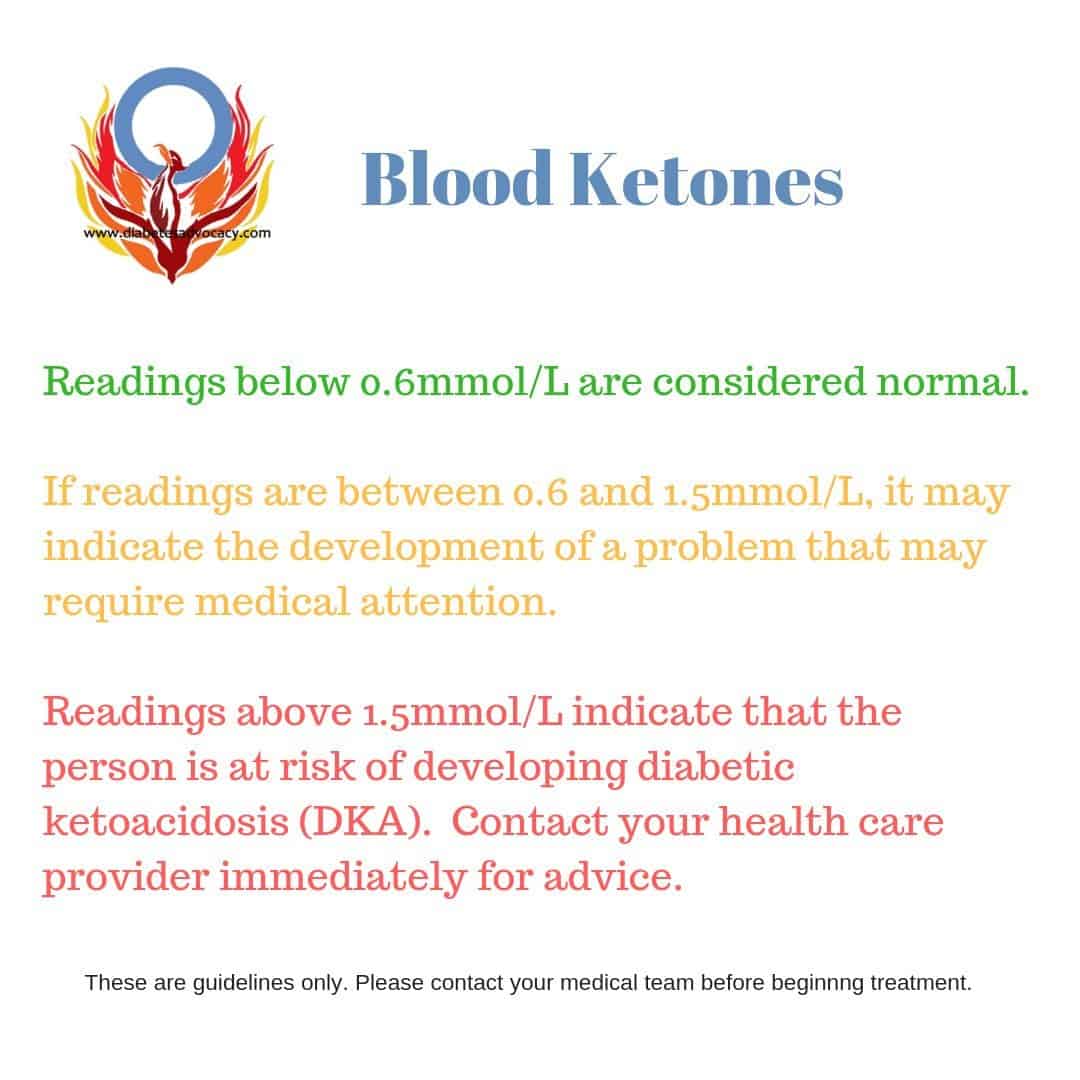
Read What you should know about Ketones.
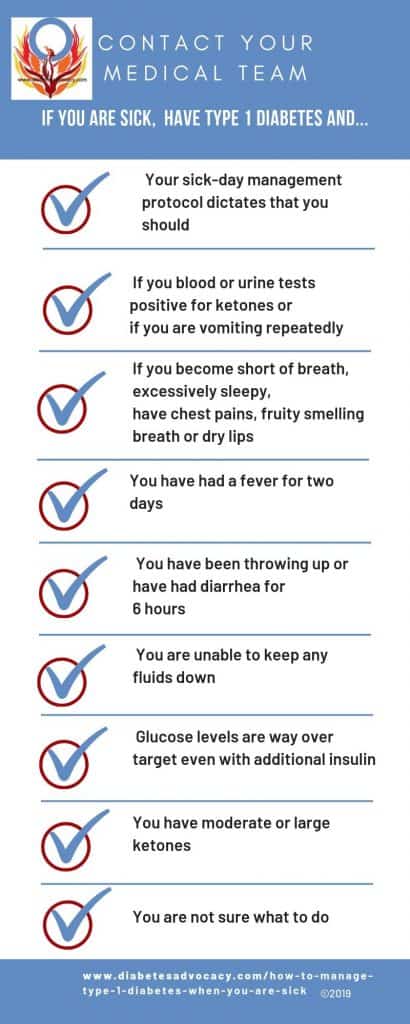
When to contact your medical team?
Contact your doctor or diabetes care team when any of the following occur:
- Your sick-day management protocol dictates that you should
- If your blood or urine tests positive for ketones or if you are vomiting repeatedly
- If you become short of breath, excessively sleepy, have chest pains, fruity smelling breath or dry lips
- You have had a fever for two days
- If you have been throwing up or have had diarrhea for 6 hours
- You are unable to keep any fluids down
- Blood glucose levels are way over target even with additional insulin
- Blood glucose levels are under 3.9mmol/L (70 mg/dl) and are not responding with treatment
- You have moderate or large ketones
- You are not sure what to do
Listen to why it is important to always be prepared when you go to the hospital in this episode of the Diabetes Goddess Podcast.
Sick days with type 1 diabetes are manageable
Being sick with type 1 diabetes is a serious occurrence. It is vital that you carefully monitor blood glucose levels and watch for ketones. Stay hydrated and keep in contact with your diabetes team. When in doubt, go to your local emergency room for assistance. A person with type 1 diabetes who is sick can quickly become dehydrated and go into diabetic ketoacidosis.
What to do if you get COVID-19
If you get COVID-19 and have type 1 diabetes Children With Diabetes Chairman of the Board, Dr. Kenneth Moritsugu, MD, MPH, FACPM, former Surgeon General of the United States suggests the following:
- Make sure you have a diabetes emergency kit prepared, including a 90 day supply of medications if at all possible (contact your doctor regarding prescriptions, to see if they can help you obtain a 90 day supply). We understand that many pharmacies are restricting individual access to 90 day supplies of insulin or other supplies in an effort to prevent hoarding. Remind your pharmacy that during this stressful time, insulin needs are known to go up and many individuals will also need to check their bg levels more often.
- Review sick day rules.
- Keep low blood sugar treatment tools on hand.
- Update/obtain glucagon and ketone strips


Great suggestions !!!