
The glycated hemoglobin A1c (hbA1c) or A1c as it is known in the diabetes community, is a measure of how much glucose has “stuck” to the red blood cells over the course of 2-3 months. Hemoglobin is a protein found in your red blood cells. It gives our blood its red colour and carries oxygen throughout the body. When glucose (the sugar in our blood) builds up in our blood, it binds to the hemoglobin in the red blood cells. An A1c test measures how much sugar has bound to the red blood cells in the past 2-3 months.
Your A1c does not define you

When attending your regular diabetes checkup, waiting for the results of your A1c can feel like waiting in the principal’s office for your report card. Were you a good pancreas or a bad one over the past 2-3 months? Will your team praise you or scold you? These are often the thoughts that run through patients’ minds as they head into this visit.
The reality is that this isn’t a report card. It is more like a compass reading. It provides you with a direction from which to go forward.
Many things have gone into impacting your blood glucose levels. You may have been sick, stressed, or have started a new exercise routine. The highs and lows of life will result in the ups and downs in your results.
Here are a few tips that can help you to lower your A1c.
Work with your diabetes team
If you feel that your A1c is too high, take a bit of time to go over things with your team. Together you can discuss what may have impacted your results. You can also discuss what can you do in the future to bring your A1c more in line with goals set by you and your team.
Perhaps they will look at adding a continuous glucose monitor to your diabetes toolkit. A different insulin or an insulin pump may be something else that needs to be discussed.
They may also suggest studying your Time in Range to get a more accurate gauge of what is going on with your blood sugar levels.
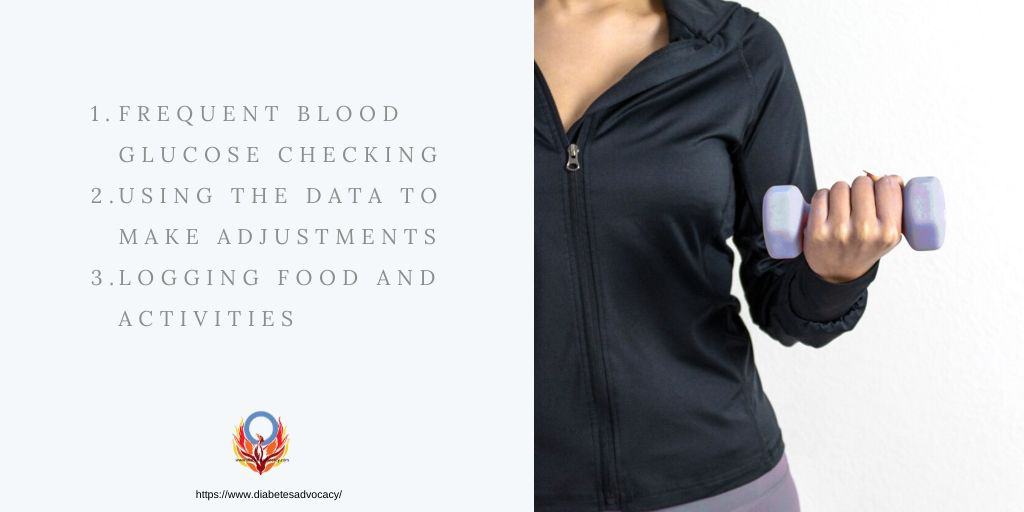
Frequent blood checks
As a parent of a child with diabetes, I worked hard to keep my son’s blood glucose levels in a range that kept him as close to 7% or under as possible for the majority of his youth. That was easier to do when he was smaller, but we managed it well into his twenties. This was in part because I am a firm believer in data.
Without blood glucose readings, it is impossible to make adjustments and keep on top of highs and lows. Whether you are scanning a Libre, watching your CGM data on your phone, or pricking your finger, get the data so that you can more easily understand how your body responds to various foods and events.
Use the data to make adjustments
Whether we had a teen amount of data or a larger pool from Mom checks, we carefully watched for trends. For the first few years, this was done with the supervision of our diabetes team. As time went by, they trusted us to make many of our own decisions and only looked at readings during clinic appointments.
If I saw a low blood glucose happening two or three times in a row and I did not have a good reason for it happening (he had been exercising or we had made a mistake in carb counting), I would adjust his insulin accordingly. When he was high, I would wait a little longer before making a change. I would want to see 3 or 4 readings that were off to make sure that it wasn’t a carb counting error or a site that was bad. It was important that there be a true pattern before changes were made.
Talk to your diabetes team and learn when you should be making adjustments. Your insulin pump may do a lot of the work for you, but you should still have a good idea of what needs to be changed yourself.
Log your food and activity
It was easier to find a pattern if I also monitored what my son ate and what he was doing. Again, this was much easier to do with a toddler than it was a teenager. Together, however, we would try to gage what he ate and what he was doing to know if a change was warranted.
You may not be a pencil and paper sort. There are many apps that allow you to keep track of your food and activity levels. If that is still too much for you, consider reviewing your readings every 2-3 days so that some of your food and activity levels are still fresh in your mind.
Prebolusing can reduce your A1c
If you know that you will be eating within 20 minutes and you know the carb count in what you will be eating, bolus (inject) your fast-acting insulin ahead of your meal. This gives it time to be working in your system as the same time as your food. Doing this can help avoid some glucose spiking.
For small children or picky eaters, this can be challenging. One option is to bolus for half of what you think that they may eat beforehand and then give the rest of the insulin for the meal after you know what was consumed.
Site rotation
Remember to always rotate your injection and infusion set sites. If scar tissue builds up, it will hinder insulin absorption and result in higher blood glucose levels.
Work with your team
I know I said it before, but I we can’t stress enough, always work with your clinic. This includes your doctor, nurse, and dietitian. They are the experts in diabetes care and you are the expert on your body. If you work together, you can come up with strategies that will keep you healthy and living your best life with diabetes.
When you meet with your diabetes team, you can feel overwhelmed by all of the information that you receive. Plan your appointment ahead of time by bringing notes with your own questions and take the time to do a quick recap after your appointment so you don’t forget anything.



You shouldn’t feel guilty because you guys get a good A1c. I have had bad and I have good. I share both because it helps other people know that they are not alone with the bad and gives encouragement that they can get there too with the good. You are giving your son a good foundation so when he takes over the helms, he is going to have a good understanding of the things he needs to do.
Thanks so much Kelly!
Its not a report card? Dammit, I convinced my parents 30 years ago, it mean I was an extraordinarily smart kid. I so hope they do not find out about this. 🙂
Haha! You and my son both 😉